
Offer A
Before you build for mining, define the right mine problem.
A short, structured sprint for teams with credible technology and no sufficiently defined mining application. It converts a broad technology capability into one prioritized mining use case, an approved demonstration context, and a proof plan that can be funded.
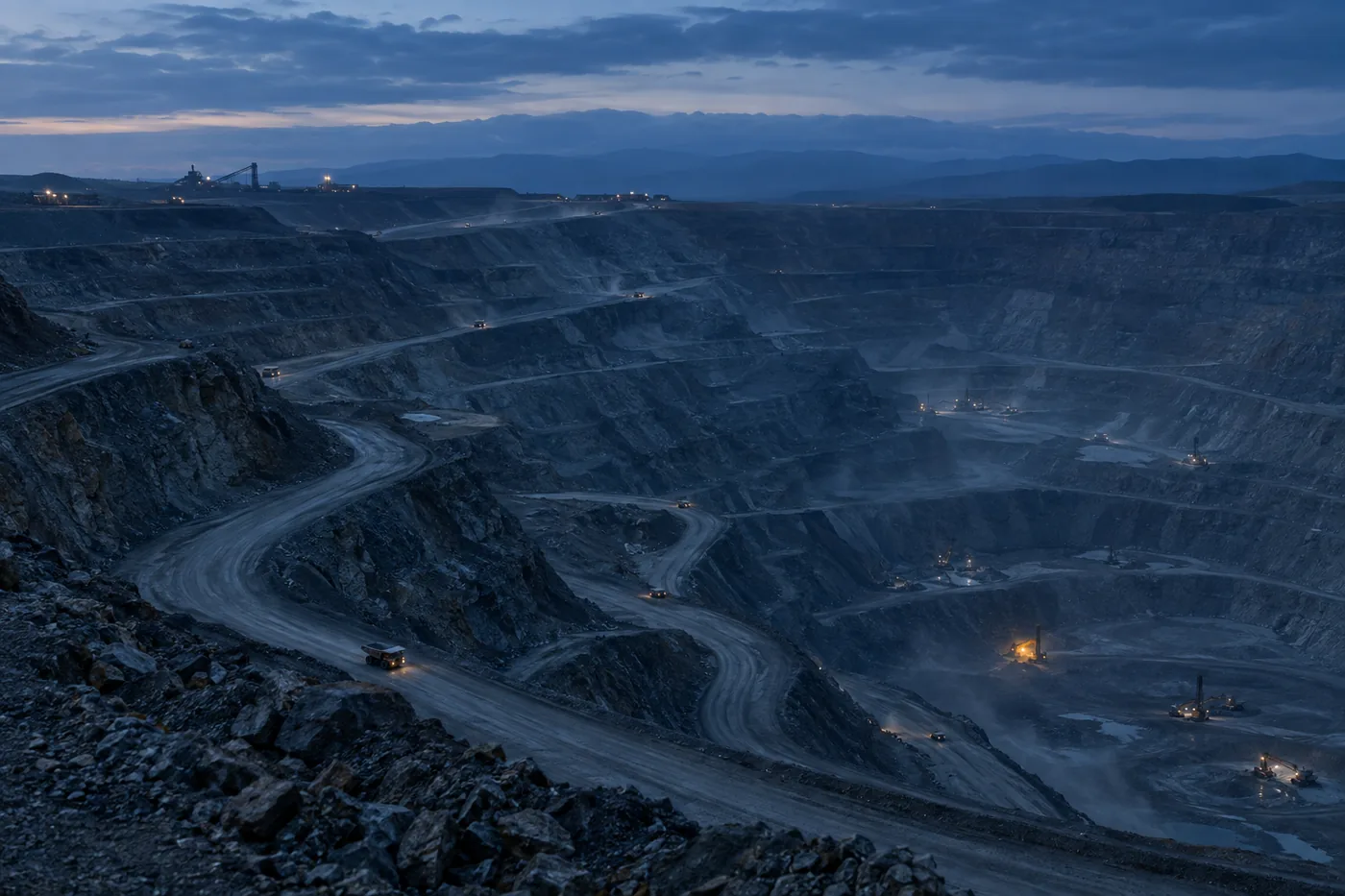
Fig. 01 — Define the mine problem
Purpose
Where can this technology create practical value in mining, and what must a first mine-relevant demonstrator prove?
The fastest way to build the wrong mining product is to design around an assumed use case. This sprint establishes the use case, the operating context, the stakeholders who can approve or block adoption, and the evidence a first demonstrator has to produce — before engineering budget is committed.
Fit
Entry criteria.
- A credible technology, capability or concept — proven in a laboratory, a pilot, or an adjacent industry.
- No sufficiently defined mining application, target workflow, demonstration context or proof objective.
- A single technology platform or product family, and no more than three candidate mining applications.
- An executive sponsor and a willingness to act on the recommendation, including a recommendation to narrow or pause.
Offers A and B may be sold as a single milestone-gated engagement with a formal context-approval gate between them, normally 7–10 calendar weeks in total.
Method
Workstreams.
Technology and evidence review
Establish a shared, evidence-based understanding of current capability, credible differentiators, limitations and constraints, using available technical descriptions, demonstrations, architecture information and prior deployment learning.
Mining opportunity framing
Identify and compare candidate mining applications against operational value, evidence availability, demonstration feasibility, adoption friction and deployment realism.
Operating-context translation
Translate the selected application into mine reality: work area, user workflow, operational decision supported, environmental exposure, installation and interface constraints, power, communications, data and site-authorization considerations.
Stakeholder and adoption mapping
Identify operational users, technical evaluators, maintenance and safety stakeholders, IT/OT, site champions, sponsors, budget owners and procurement — and the evidence each needs. Direct external interviews are not included unless separately scoped.
Demonstrator and proof planning
Define what a first mine-relevant demonstrator must prove, what is intentionally out of scope for it, and the validation sequence over the following 90 days.
Deliverables
What you receive.
| Deliverables | What you receive |
|---|---|
| Mining Opportunity Map | Candidate applications compared, with a recommended primary use case, an optional secondary, and explicitly deferred or excluded applications. |
| Demonstration Context Definition Brief | The mine type, work area, workflow, operating conditions and constraints that will drive the first demonstrator. |
| Stakeholder and Adoption Map | Who influences adoption, what role each plays, and the evidence each will require. |
| Mine Environment and Demonstration Considerations Brief | Environmental exposure, installation, power, communications, data, safety and site-authorization realities that shape a credible demonstration. |
| Demonstrator Decision Brief | What a first demonstrator must prove, what it must not attempt, and the decision criteria for proceeding. |
| Client-Led Discovery Question Set | A structured question set your team uses in its own customer and mine conversations. |
| 90-Day Validation Roadmap | A sequenced plan of validation activities, owners and evidence thresholds. |
| Executive readout | A working session covering the recommendation, the rationale, and the next decision. |
Boundaries
Explicitly out of scope.
- More than one technology platform, or a broad market study across unrelated mining segments.
- Detailed market sizing, forecasts, competitive intelligence, pricing strategy or final product-market strategy.
- Direct interviews with mine operators, customers, OEMs, dealers, distributors, investors, partners or regulators.
- Guaranteed customer introductions, mine-site access, pilot sponsorship, purchase orders, investment, grant approval, regulatory approval or certification.
- Site visits, mine visits, travel, onsite workshops, field trials, installation surveys or environmental measurements.
- Offer B deliverables: system requirements specification, modular configuration and interface definition, or a detailed validation and customer-demonstration plan.
- Detailed engineering: CAD, schematics, PCB layout, firmware, application or cloud development, prototype construction, detailed bills of material or test execution.
- Formal EMC, environmental, safety, functional-safety, cybersecurity, regulatory, certification, product-liability, tax, legal, insurance or manufacturer-of-record analysis or opinion.
- Procurement, partner contracting, supplier qualification, commercial negotiation, sales representation or management of third-party work.
Delivery
How it runs.
- Duration
- 1–2 weeks of concentrated effort, normally completed within 2–3 calendar weeks of the kickoff and receipt of client inputs.
- Mode
- Remote-first, with a structured kickoff, working sessions and an executive readout.
- Commercial model
- Fixed scope, fixed fee, with stated assumptions, client inputs, acceptance criteria and exclusions set out in the proposal.
- Client inputs
- Technology description and available evidence, any customer or mine contacts and learning to date, sponsor availability, and timely review of draft deliverables.
Next decision
What the sprint enables.
A funded, well-aimed demonstrator — or a documented decision to narrow, pivot, validate further, or stop. A recommendation to stop is a legitimate outcome. Where the team proceeds, the approved demonstration context becomes the entry condition for Offer B.
Start a conversation
Before you build for mining, define the right mine problem.
A short, structured sprint for teams with credible technology and no sufficiently defined mining application. It converts a broad technology capability into one prioritized mining use case, an approved demonstration context, and a proof plan that can be funded.