
Offer B
Turn tested technology into a credible mining demonstrator.
A requirements-level definition of the demonstration platform a mine customer can actually evaluate — what it must do, what mine workflow it must support, how it will be validated, and what evidence it must produce.
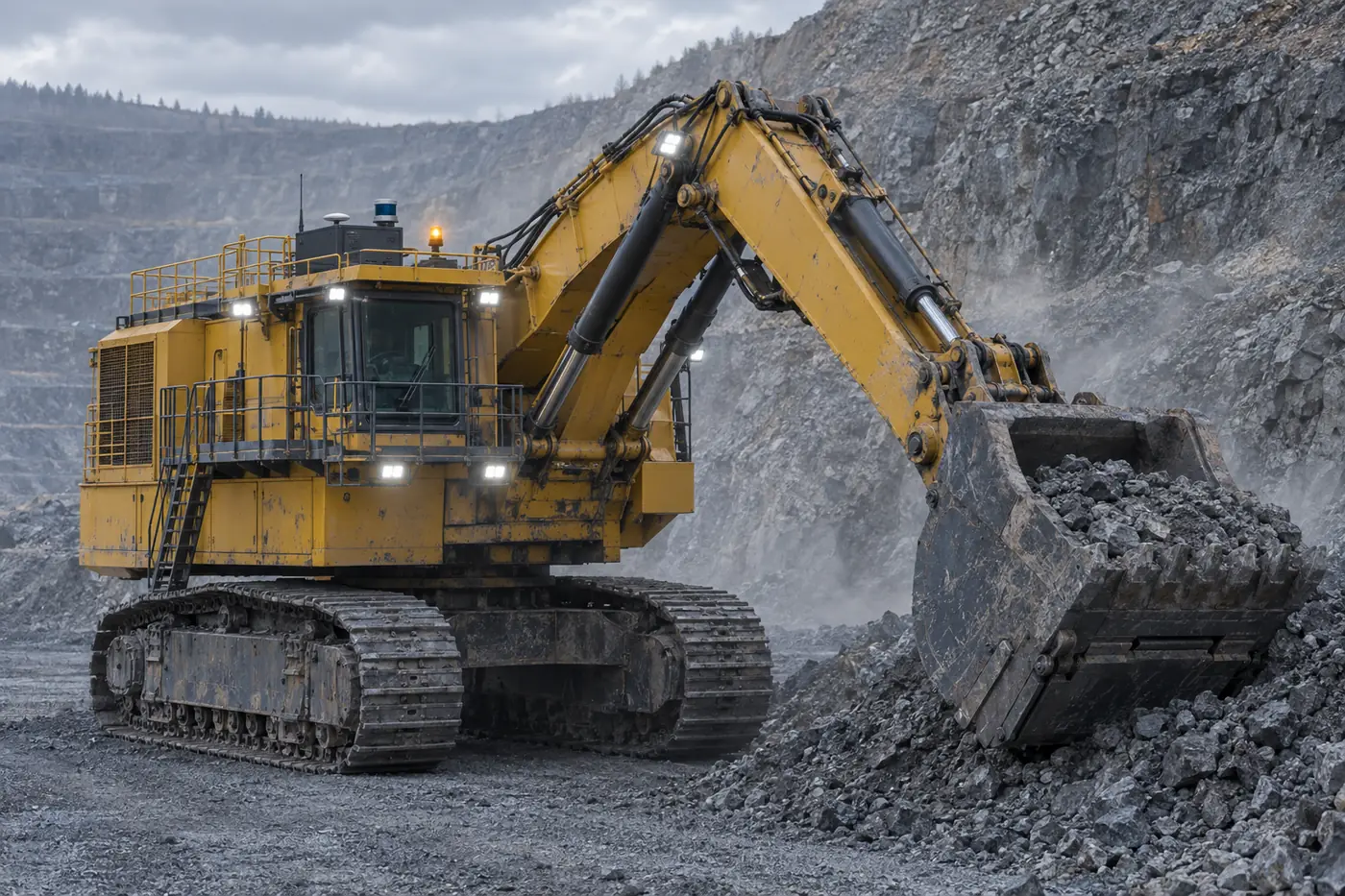
Fig. 01 — Build the proof
Purpose
What demonstrator should we build, what mine workflow must it support, and what evidence must it produce?
A laboratory system, a tripod-mounted sensor, an adapted industrial product or a pilot configuration is not a field-deployable demonstration platform. This engagement defines one, at requirements level, so detailed design and build can be authorized with confidence — or deliberately narrowed before unnecessary investment.
Fit
Entry criteria.
- Tested technology, a laboratory prototype or an early system.
- An approved Offer A demonstration context, or equivalent documented and client-approved application and context.
- A single technology platform and one primary demonstrator configuration, with at most two high-level secondary adaptation concepts.
- Intent to build, demonstrate or seek funding on the basis of the definition.
Offers A and B may be sold together as one milestone-gated engagement, with a formal context-approval gate between them.
Method
Workstreams.
Baseline confirmation and evidence review
Establish a shared understanding of the approved demonstration context, the technology baseline, existing evidence, technical constraints and the intended demonstrator purpose.
Operational use-case definition
Define the mine workflow the demonstrator must support, the operational decision it informs, the users involved, and the ground-truth basis for the evidence produced.
System requirements definition
Specify functional, performance, environmental, mounting, power, compute, communications, spatial-reference, data-handling, HMI, setup, calibration, cleaning, maintenance, diagnostics and field-serviceability requirements.
Modular configuration and interface definition
Separate the common core from application-specific adaptation, and define the mechanical, electrical, data and workflow interfaces between them.
Validation and demonstration planning
Define demonstration objectives, success measures, ground-truth needs, verification methods, validation sequence, evidence thresholds and readiness gates.
Risk and decision framing
Capture technical risks, assumptions, dependencies and decisions in a single register that survives the engagement.
Deliverables
What you receive.
| Deliverables | What you receive |
|---|---|
| Operational Use-Case Definition | The mine workflow, users, decision supported and ground-truth basis for the demonstration. |
| Mining Demonstration Platform System Requirements Specification | The requirements-level definition of the field-deployable demonstrator. |
| Modular Configuration and Interface Definition | Common core versus application-specific adaptation, with defined interfaces. |
| Validation and Customer Demonstration Plan | Objectives, success measures, verification methods, sequence and evidence thresholds. |
| Requirements Traceability and Verification Matrix | Each requirement linked to its verification method and evidence. |
| Technical Risk, Assumptions, Dependencies and Decision Register | A living record of what is known, assumed, pending and decided. |
| Executive Decision Package | A concise basis to authorize detailed design and build, narrow the demonstrator scope, or pause. |
Boundaries
Explicitly out of scope.
- Mining application framing, use-case selection or first demonstration-context approval — these are Offer A activities.
- More than one technology platform, or multiple independent mining applications, mine sites, geographies or customer-specific integration studies.
- Detailed mechanical, electrical, optical, firmware, software, data-science, manufacturing or production-product design.
- CAD models, fabrication drawings, PCB layouts, detailed bills of material, source code, algorithms, work instructions, test fixtures or engineering-release packages.
- Procurement, fabrication, assembly, integration, laboratory testing, installation, commissioning, hardware operation or field-trial execution.
- Formal certification, laboratory testing, regulatory filings, OEM approval, functional-safety analysis, safety-case preparation, detailed cybersecurity assessment or legal and compliance advice.
- Site visits, mine visits, travel, customer meetings, supplier meetings, external interviews or onsite workshops unless separately approved.
- Guaranteed sensing, classification, operational, technical, commercial, customer-acceptance, mine-site-access, certification, regulatory or schedule outcomes.
- Supplier qualification, partner contracting, commercial negotiation, sales representation or ongoing program management.
Delivery
How it runs.
- Duration
- Normally 5–7 calendar weeks after the demonstration context is approved. Combined with Offer A, normally 7–10 calendar weeks.
- Mode
- Remote-first, with a structured kickoff, working sessions, draft review and an executive decision readout.
- Commercial model
- Fixed scope, fixed fee, with stated assumptions, client inputs, acceptance criteria and exclusions. Where sold with Offer A, a formal context-approval gate separates the two.
- Client inputs
- Approved application and demonstration context, technology baseline and evidence, technical point of contact, and timely review of draft deliverables.
Next decision
What the definition enables.
A credible basis to authorize detailed design and build, conduct targeted validation, narrow the demonstrator scope, or pause before unnecessary investment. Once a representative demonstrator exists and has been exercised, Offer C establishes what must change before it can become a product.
Start a conversation
Turn tested technology into a credible mining demonstrator.
A requirements-level definition of the demonstration platform a mine customer can actually evaluate — what it must do, what mine workflow it must support, how it will be validated, and what evidence it must produce.